OEM vs Private Label Perfume Manufacturing: Key Differences Explained
Understand the differences between OEM and private label perfume manufacturing. Compare ownership, control, pricing, MOQ, and which model suits your brand.
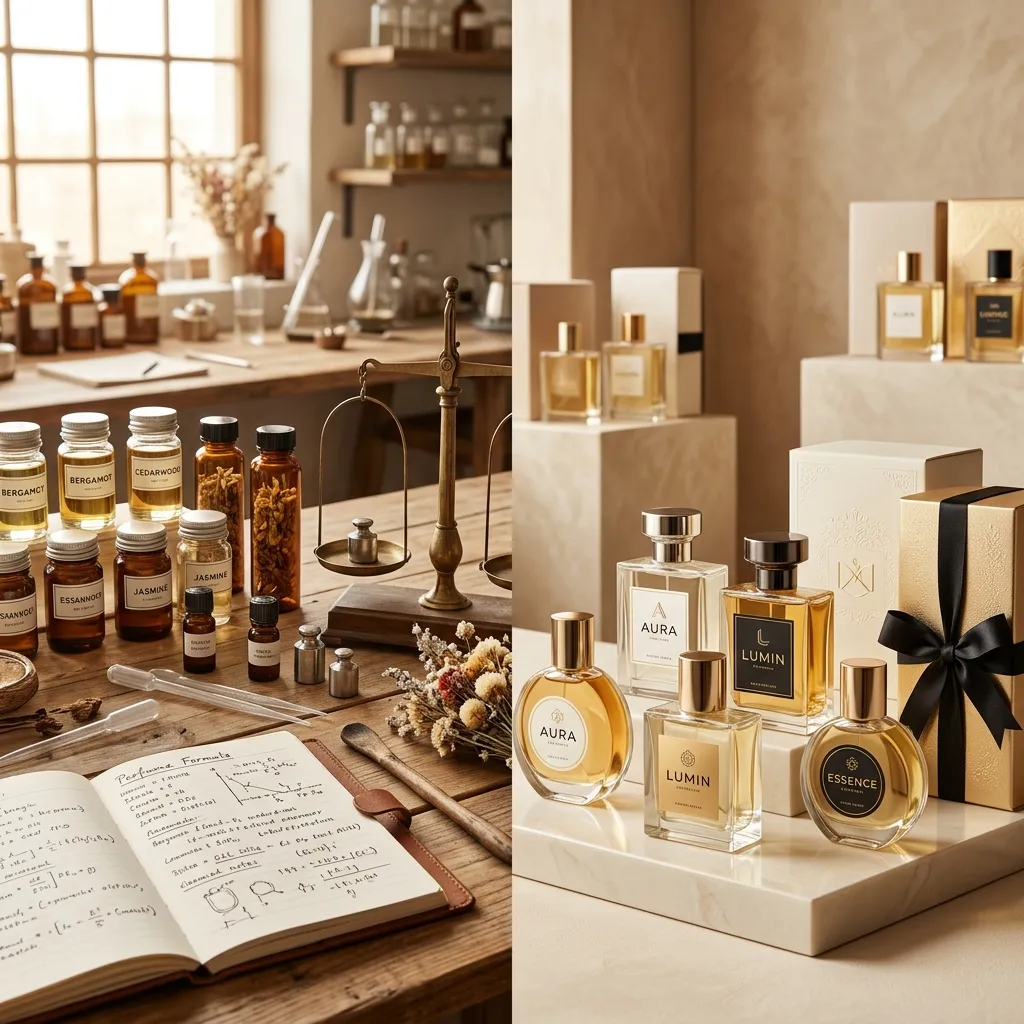
OEM, ODM, private label, white label, contract manufacturing — these terms get thrown around loosely in perfume manufacturing, and the boundaries between them blur depending on who you ask. Here's how each model actually works, and which one fits your situation.
Key Takeaways
- Private label = manufacturer develops the product, you brand it
- OEM = you provide the formula, manufacturer produces it
- ODM = manufacturer designs everything, you buy finished products
- Startups should generally start with private label, then move to OEM as they grow
- Both models are available at MOQs as low as 1,000 units at select manufacturers
Definitions: OEM, ODM, and Private Label
OEM — Original Equipment Manufacturer
You provide the exact specifications:
- Your proprietary fragrance formula
- Your bottle design (or specific stock selection)
- Your packaging specifications
- Your quality standards
The manufacturer's role is strictly production — they manufacture to your spec without involvement in product development.
ODM — Original Design Manufacturer
The manufacturer does everything:
- Designs the fragrance
- Selects or designs the bottle
- Creates the packaging
- Develops the complete product
You purchase finished products and sell them under your brand. This is the fastest and cheapest route to market but offers the least differentiation.
Private Label
A hybrid model that sits between OEM and ODM:
- The manufacturer collaborates on fragrance development (you brief, they create)
- You choose from existing components or commission custom ones
- You own the brand identity and customer relationship
- The manufacturer brings expertise and infrastructure
At Fragrance & Fashion, most of our 240+ brand partnerships operate under the private label model — brands brief us on their vision, and we develop custom fragrances and components to match.
Side-by-Side Comparison
| Factor | OEM | Private Label | ODM (White Label) |
|---|---|---|---|
| Fragrance ownership | You own the formula | Shared or exclusive (negotiable) | Manufacturer owns the formula |
| Development involvement | Full — you develop | Collaborative | None — manufacturer develops |
| Upfront investment | Higher (R&D costs) | Moderate | Lowest |
| Time to market | 12–20 weeks | 8–16 weeks | 4–8 weeks |
| Differentiation | Maximum | High (if exclusive) | Low (others may use same formula) |
| Expertise required | In-house perfumer or consultancy | Brand vision + market knowledge | Minimal |
| MOQ | Often higher (3,000–10,000) | Moderate (1,000–3,000) | Often lower (500–1,000) |
| Per-unit cost | Lower at volume | Competitive | Lowest |
| Brand uniqueness | Complete | High | Limited |
| Suitable for | Established brands, luxury houses | Startups, growing brands, retailers | Quick launch, testing concepts |
When to Choose OEM
OEM manufacturing makes sense when:
- You have proprietary formulations — If you've developed fragrances with an independent perfumer or fragrance house, and you want to protect that IP
- You need maximum differentiation — Every aspect of the product is uniquely yours
- You have volume — OEM manufacturers often require higher MOQs (3,000–10,000 units) because they're not involved in development
- You have technical expertise — You understand fragrance concentrations, IFRA compliance, and production specifications
- You're scaling an existing line — You've validated your products and want cost-optimised production
OEM process flow
Your formula → Manufacturer reviews feasibility → Trial batch → QC approval → Production → Your warehouse
When to Choose Private Label
Private label manufacturing is ideal when:
- You're launching a new brand — You have the brand vision but need manufacturing expertise to realise it
- You don't have in-house perfumers — The manufacturer's fragrance team develops compositions based on your brief
- You want end-to-end service — One partner handles everything from scent to shelf
- You're testing the market — Lower MOQ (as low as 1,000 units at Fragrance & Fashion) lets you test before scaling
- You want speed — Private label is faster because the manufacturer's expertise accelerates development
Private label process flow
Your brief → Manufacturer develops samples → You approve → Component selection → Production → Your warehouse
Learn more about the private label process →
When to Choose ODM / White Label
ODM or white label is appropriate when:
- Speed is the priority — You need products on shelf within weeks, not months
- You're testing a category — A retailer adding fragrances to their product mix without deep category expertise
- Budget is extremely tight — Minimal development costs
- Differentiation isn't critical — The same base product may be available to other brands
Caution: ODM/white label products offer low barriers to entry — which means low barriers to competition. If three brands on the same marketplace sell identical fragrances in different packaging, none has a defensible position.
Cost Comparison
Here's a representative cost comparison for a 100 ml EDP across all three models:
| Cost Component | OEM | Private Label | ODM |
|---|---|---|---|
| Fragrance development | N/A (your formula) | Included | Included |
| Fragrance (per unit) | Moderate | Moderate to High | Low |
| Bottle | Varies | Varies | Low |
| Cap | Varies | Varies | Low |
| Packaging | Varies | Varies | Low |
| Filling & assembly | Standard | Standard | Standard |
| Total per unit | Variable | Variable | Lowest |
| Tooling (one-time) | Yes (if custom) | Yes (if custom) | No |
| Development fee | N/A | Often included | N/A |
| Typical MOQ | 3,000–10,000 | 1,000–3,000 | 500–1,000 |
Costs are indicative and vary by specifications, volumes, and manufacturer.
Hybrid Approaches
In practice, many brand–manufacturer relationships evolve over time:
Start private label → Move to OEM: Launch with the manufacturer's expertise, then develop proprietary formulations as your brand and knowledge grow. This is the most common path for successful Indian perfume brands.
OEM for hero products, private label for range extensions: Keep your signature fragrances as OEM (maximum IP protection) while using private label for seasonal launches, limited editions, and flankers.
Multi-format approach: Use OEM for EDPs (your premium line), private label for body mists and attars (faster development), and ODM for travel sizes or gifting sets.
How Fragrance & Fashion Supports Both Models
At Fragrance & Fashion, we work across all three models:
- Private label — Our most common engagement. Brands brief us, our perfumers develop exclusive fragrances, and we manufacture end-to-end. See our process.
- OEM — Brands with existing formulas bring their specifications. We produce to spec with the same quality infrastructure. Send your specifications.
- ODM — For brands that want a quick-launch solution. We offer ready-to-brand fragrances from our library.
Regardless of model, every client gets:
- 1,000 unit MOQ — Start small, scale fast
- End-to-end manufacturing — All six disciplines under one roof
- Export readiness — 12+ markets with UN-rated packaging and full documentation
- Quality certification — ISO 9001, IFRA, CE, FDA compliance
Ready to decide which model fits your brand? Send us a brief or WhatsApp us for a consultation.
Frequently Asked Questions
OEM (Original Equipment Manufacturer) perfume manufacturing is when you provide the exact fragrance formula, specifications, and packaging design to a manufacturer, and they produce the product to your specifications. You own the formulation and intellectual property entirely. The manufacturer is strictly a production partner.
ODM (Original Design Manufacturer) perfume manufacturing is when the manufacturer designs and develops the product (fragrance, bottle, packaging) and you purchase the finished product to sell under your brand. This is sometimes called 'white label' because you're essentially putting your label on a manufacturer-developed product.
Private label is usually the better fit for startups. You get the manufacturer's fragrance expertise without needing your own perfumer, the upfront cost is lower, and you're in market faster. OEM makes more sense once you have proprietary formulas worth protecting or in-house perfumery capability.
Yes. Many brands start with private label manufacturing to launch quickly, then transition to OEM as they develop proprietary formulations and deeper industry knowledge. A good manufacturing partner will support this transition. At Fragrance & Fashion, we offer both models and help brands evolve their approach over time.
Yes, private label manufacturing is completely legal in India and globally. It's the standard business model in the cosmetics and fragrance industry. The key requirement is that the product labelling must accurately identify the manufacturer and comply with BIS and Legal Metrology standards.
 Private Label
Private Label Perfume Manufacturer: How to Choose the Right Partner in India
How to choose a private label perfume manufacturer in India. What to look for in capabilities, MOQ, certifications, pricing models, and what end-to-end manufacturing actually includes.
 Startup Guides
How to Start a Perfume Brand in India: Complete 2026 Guide
How to launch a perfume brand in India. From choosing a manufacturing partner and developing fragrances to licensing, packaging, and your first production run with MOQ as low as 1,000 units.
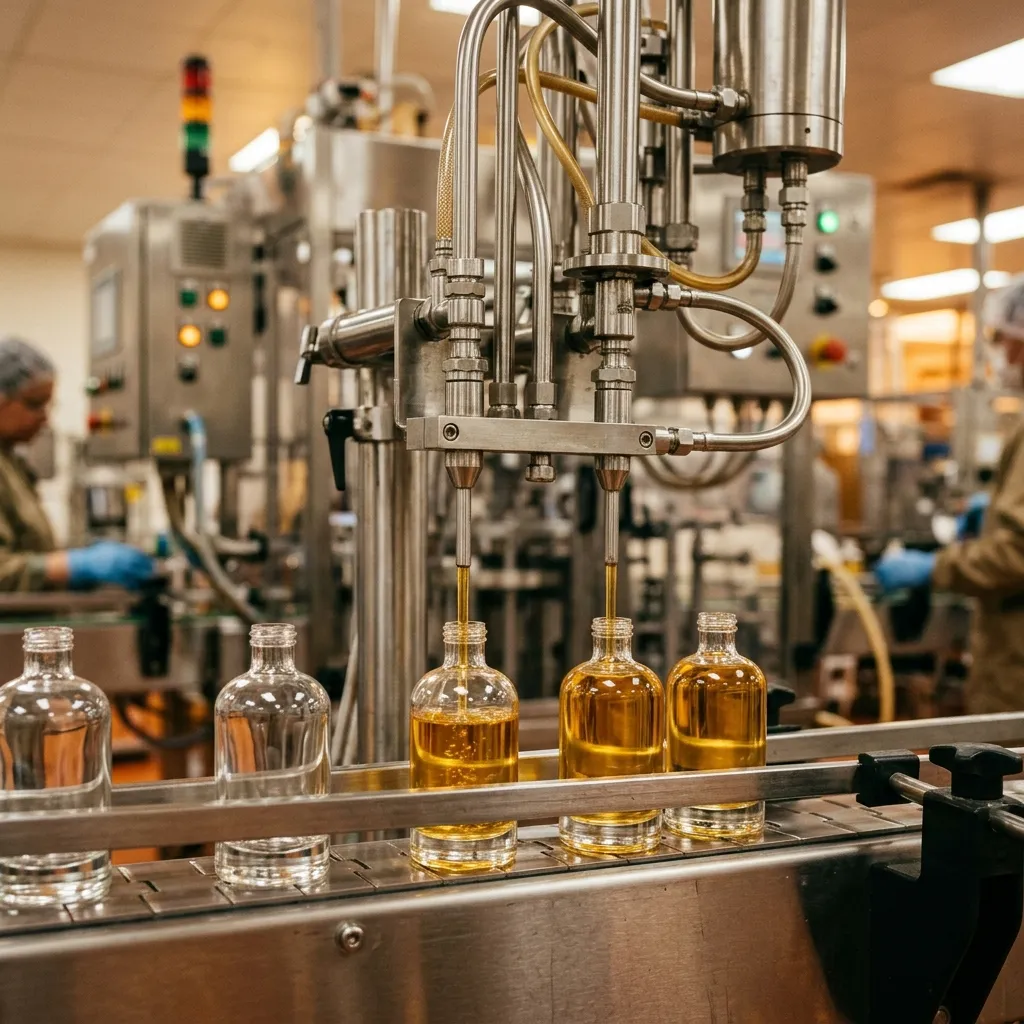 Perfume Manufacturing
Perfume Manufacturing Process: 6 Steps from Fragrance to Finished Product
A detailed look at the perfume manufacturing process, from fragrance composition to retail-ready packaging. Understand how private label perfumes are made in a modern facility.