Perfume Packaging Guide: Materials, Design, and Cost Breakdown
Perfume packaging explained: bottles, caps, rigid boxes, inserts, labels, and finishing techniques. Covers materials, per-unit cost structures, MOQ, and design decisions for private label brands.
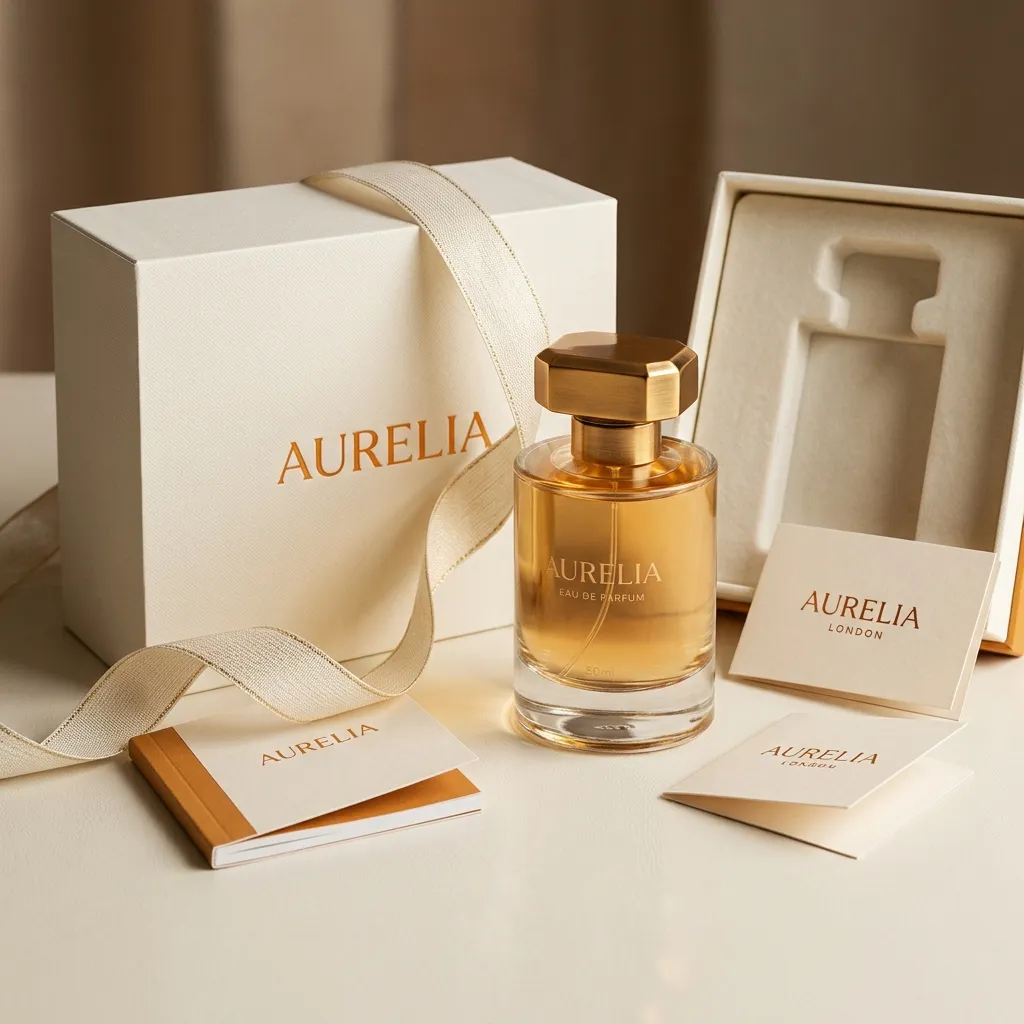
The fragrance gets the customer to repurchase. The packaging gets them to pick it up in the first place. This guide covers what a brand owner needs to know about perfume packaging — materials, manufacturing methods, cost structures, and the design decisions that separate shelf-stoppers from shelf-sitters.
Key Takeaways
- Packaging typically accounts for 30–45% of total per-unit manufacturing cost
- Stock bottles are the smart choice for startups — customise with finishes instead of investing in custom moulds
- Rigid boxes are the premium standard but cost 2–3× more than folding cartons
- Zamac caps deliver a luxury feel but require a higher investment compared to standard ABS plastic closures
- Always design packaging to meet labelling regulations before finalising artwork
The Anatomy of Perfume Packaging
A finished perfume product consists of multiple packaging layers:
| Layer | Component | Purpose |
|---|---|---|
| Primary | Glass bottle + spray mechanism | Contains the fragrance |
| Closure | Cap (zamac, ABS, wood, surlyn) | Protects spray, defines aesthetics |
| Secondary | Box (rigid, folding carton, sleeve) | Protects bottle, communicates brand |
| Insert | Tray, cradle, or tissue | Holds bottle securely inside box |
| Overwrap | Cellophane or shrink film | Tamper evidence, freshness seal |
| Label | Bottle label + box print | Regulatory compliance, branding |
| Tertiary | Shipping carton (UN-rated for export) | Transit protection, logistics |
Glass Bottles — The Foundation
Glass types
| Glass Type | Properties | Cost | Best For |
|---|---|---|---|
| Soda-lime (clear) | Standard, recyclable, affordable | Low | Mass market, mid-range |
| Soda-lime (frosted) | Matte finish, tactile, elegant | Low-Medium | Premium, gifting |
| Soda-lime (coloured) | Tinted in the melt — amber, blue, green | Medium | Brand differentiation |
| Borosilicate | High thermal resistance, clarity | High | Niche, artisanal |
| Crystal (lead-free) | Exceptional clarity, weight, brilliance | Very High | Ultra-luxury |
Stock vs. custom bottles
Stock bottles — Choose from your manufacturer's existing mould library. Advantages:
- Avoids upfront custom mould tooling expenses
- Faster time-to-market compared to custom tooling
- Available in standard volumes (30ml, 50ml, 100ml)
- Customisable with surface treatments
Custom bottles — Commission a new mould for a unique shape. Advantages:
- Complete design freedom
- Unique brand identity
- Patent protection possible
- Higher MOQ typically required (3,000–10,000 units)
Recommendation for startups: Start with stock bottles customised through frosting, spraying, or printing. Switch to custom moulds when your brand identity and volumes justify the investment. Fragrance & Fashion offers 50+ stock bottle shapes.
Bottle decorating techniques
| Technique | Description | Cost | Visual Impact |
|---|---|---|---|
| Spray coating | Colour applied by spray gun (matte or gloss) | Low | Medium |
| Frosting | Acid or sandblast etching for matte finish | Low-Medium | High |
| Electroplating | Metal coating (gold, silver, chrome) | Medium-High | Very High |
| Metallisation | Vacuum-deposited metal layer | Medium | High |
| Screen printing | Direct ink printing on glass | Low-Medium | Medium |
| Hot stamping | Metallic foil pressed onto glass | Medium | High |
| UV printing | Full-colour digital print on glass | Medium | Very High |
| Decal transfer | Ceramic decal fused onto glass | Medium-High | Very High |
Caps and Closures — The Tactile Element
The cap is often the first thing a consumer touches. Its weight, material, and sound (the satisfying click of a magnetic cap, the smooth twist of zamac) create a sensory impression that shapes perceived value.
Cap material comparison
| Material | Weight | Feel | Relative Investment | MOQ | Best For |
|---|---|---|---|---|---|
| Zamac (zinc alloy) | 30–80g | Heavy, cold, premium | High | 1,000 | Luxury, gifting, Arabic |
| Aluminium | 15–40g | Sleek, modern | Medium | 1,000 | Premium contemporary |
| ABS plastic | 5–15g | Light, versatile | Low | 1,000 | Mass market, budget |
| Surlyn | 10–25g | Crystal-clear, jewel-like | High | 3,000 | Luxury transparent |
| Wood | 15–40g | Warm, organic, artisanal | Medium to High | 1,000 | Niche, eco, unisex |
| Magnetic | Varies | Satisfying click closure | High | 3,000 | Premium convenience |
Cap finishes
- Electroplating — Gold, silver, rose gold, gunmetal. The most popular finish for luxury caps.
- Anodising — For aluminium caps. Produces vibrant, durable colours.
- Soft-touch coating — Rubberised finish for a velvety feel.
- Lacquering — Coloured or clear coating for protection and aesthetics.
- Engraving — CNC or laser engraving for logos and text.
- Stone/crystal setting — Decorative elements for ultra-premium lines.
Boxes and Secondary Packaging
Box types
Rigid box (set-up box) — The premium standard.
- Material: Grey board (1.5–2.5mm) wrapped in printed art paper or fabric
- Weight: 80–250g
- Investment level: Premium
- Best for: Luxury, gifting, premium brands
- Closures: Magnetic, ribbon, flap, lift-off lid
Folding carton — Cost-effective and scalable.
- Material: SBS (Solid Bleached Sulphate) or FBB (Folding Box Board), 300–500gsm
- Weight: 20–60g
- Investment level: Highly cost-effective
- Best for: Mass market, mid-range, e-commerce
- Ships flat — lower storage and shipping costs
Sleeve / slipcase — Minimal and modern.
- Material: Card stock or rigid board
- Weight: 15–40g
- Investment level: Moderate
- Best for: Minimalist brands, niche, D2C
Print and finishing techniques
| Technique | Description | Cost Impact | Typical Use |
|---|---|---|---|
| Offset printing | Standard full-colour printing (CMYK) | Base | All |
| Digital printing | Short-run, variable data capable | Base-Low | Small batches, personalisation |
| Foil stamping (hot) | Metallic foil pressed onto board | Medium | Logos, text, borders |
| Foil stamping (cold) | Foil applied via adhesive + UV | Low-Medium | Large foil areas |
| Embossing | Raised design pressed into board | Medium | Logos, texture patterns |
| Debossing | Depressed design pressed into board | Medium | Subtle, premium feel |
| Spot UV | Glossy coating on selected areas | Low | Contrast on matte surfaces |
| Soft-touch lamination | Velvety matte film | Low | Premium tactile feel |
| Gloss lamination | High-shine film | Low | Vibrant colour pop |
| Matte lamination | Non-reflective film | Low | Sophisticated, readable |
| Letterpress | Traditional print with deep impression | High | Ultra-luxury, artisanal |
| Edge painting | Coloured edges on rigid boxes | Medium | Detail, luxury feel |
Labels and Regulatory Compliance
Every perfume sold in India must carry specific label information:
Mandatory label elements
- Product name and brand name
- Ingredients list in INCI nomenclature (International Nomenclature of Cosmetic Ingredients)
- Net quantity in millilitres (ml)
- Maximum Retail Price (MRP) inclusive of all taxes
- Manufacturing date and expiry/best-before date
- Batch/lot number
- Manufacturer name and address (full registered address)
- Country of origin (mandatory for imported products, recommended for domestic)
- Customer care details (phone number or email)
- Barcode (EAN-13 for retail, recommended but not legally mandatory)
Label materials
| Material | Durability | Cost | Feel |
|---|---|---|---|
| Paper (coated) | Low-Medium | Lowest | Traditional |
| Polypropylene (PP) | High | Low | Clean, modern |
| Polyester (PET) | Very High | Medium | Durable, glossy |
| Transparent (no-label look) | High | Medium | Minimal, premium |
| Metallic | High | Medium-High | Luxury |
| Textured paper | Medium | Medium | Artisanal |
Investment Breakdown by Tier
Budget packaging
| Component | Specification | Investment Level |
|---|---|---|
| Bottle | Stock clear glass, 100ml | Low |
| Cap | ABS plastic, stock shape | Lowest |
| Box | Folding carton, CMYK print | Low |
| Label | Paper label, flexo print | Lowest |
| Insert | Die-cut card | Lowest |
| Overwrap | Shrink film | Lowest |
| Total | Cost-Effective |
Premium packaging
| Component | Specification | Investment Level |
|---|---|---|
| Bottle | Stock bottle, frosted or spray-coated | Medium |
| Cap | Zamac, electroplated | High |
| Box | Rigid box, foil stamping, soft-touch lamination | Medium-High |
| Label | Transparent PP or screen print on bottle | Medium |
| Insert | Moulded pulp or velvet-flocked tray | Medium |
| Overwrap | Cellophane with tear strip | Low |
| Total | Premium |
Luxury packaging
| Component | Specification | Investment Level |
|---|---|---|
| Bottle | Custom mould, heavy glass, electroplated | Very High |
| Cap | Zamac with stone/crystal, magnetic | Very High |
| Box | Rigid box, leather/fabric wrap, embossed, edge-painted | Very High |
| Label | Engraved or screen-printed on bottle | Medium-High |
| Insert | Custom-machined wood or acrylic tray | High |
| Overwrap | Premium cellophane or ribbon seal | Medium |
| Total | Luxury |
Design Principles for Perfume Packaging
1. Let the fragrance set the tone
A fresh citrus scent calls for clean lines, lighter colours, and transparency. An oud or oriental composition demands darker materials, heavier glass, and ornate finishing. If the bottle doesn't match what's inside it, customers notice.
2. Design for the shelf (or the screen)
If selling in retail, your bottle needs to stand out at arm's length. If selling D2C, it needs to photograph well and look premium in unboxing videos.
3. Coordinate all elements
Bottle, cap, box, and label should feel like a cohesive system. Mismatched elements (cheap cap on a premium bottle, or luxury box with a basic bottle) create cognitive dissonance.
4. Design the unboxing, not just the box
For premium lines, the opening sequence matters — the click of a magnetic closure, the tissue paper reveal, the first sight of glass. Each moment is a chance to reinforce that the customer made the right choice.
5. Plan for range extension
Design a packaging system that accommodates future SKUs — different sizes, flankers, and limited editions — without starting from scratch each time.
Working with Fragrance & Fashion on Packaging
At Fragrance & Fashion, packaging is one of our six core disciplines. We manufacture:
- Glass bottles — In-house manufacturing and stock library of 50+ shapes
- Caps — Zamac, aluminium, ABS, wood — all finishes available
- Rigid boxes — Designed, printed, and assembled in-house
- Labels — From design to application
This end-to-end approach means your fragrance, bottle, cap, box, and filling all happen under one roof — one timeline, one quality standard, one point of accountability.
See our packaging work in action: Hoor 72 case study · Bombay Lab case study · Drooks Lifestyle case study.
Ready to design your packaging? Send us a brief or chat on WhatsApp.
Frequently Asked Questions
Perfume packaging costs depend heavily on the components and finishes chosen. A basic setup (stock glass bottle + ABS cap + folding carton) requires minimal investment. A premium setup (custom bottle + zamac cap + rigid box + hot stamping) requires a higher per-unit investment. Tooling for custom moulds is an additional one-time expense.
A rigid box (also called a set-up box) is a premium packaging format made from thick grey board (1.5–2.5mm) wrapped in printed paper or fabric. Unlike folding cartons, rigid boxes maintain their shape permanently and feel substantial in hand. They're the standard for luxury and premium perfumes, often featuring magnetic closures, embossing, foil stamping, and fabric or velvet inserts.
Most perfume bottles are made from soda-lime glass or borosilicate glass. Soda-lime glass is the industry standard — affordable, recyclable, and available in clear, frosted, and coloured variants. Borosilicate glass (like Pyrex) offers better thermal resistance but is more expensive and rarely needed for perfumes. Crystal glass (lead-free) is used for ultra-luxury lines.
Yes, and most startups should. Stock bottles from your manufacturer's existing library can be customised with spraying, frosting, metallisation, screen printing, or hot stamping. This avoids custom mould costs (₹50K–3L) and long tooling timelines (6–10 weeks). At Fragrance & Fashion, our stock bottle library includes 50+ shapes that cover most brand requirements.
Exporting perfumes requires UN-rated outer packaging because fragrances containing alcohol are classified as Class 3 Dangerous Goods. This includes UN-certified corrugated cartons, proper inner cushioning, hazard labels, safety data sheets (SDS), and documentation compliant with the destination country's import regulations.
 Private Label
Private Label Perfume Manufacturer: How to Choose the Right Partner in India
How to choose a private label perfume manufacturer in India. What to look for in capabilities, MOQ, certifications, pricing models, and what end-to-end manufacturing actually includes.
 Perfume Manufacturing
Perfume Manufacturing Process: 6 Steps from Fragrance to Finished Product
A detailed look at the perfume manufacturing process, from fragrance composition to retail-ready packaging. Understand how private label perfumes are made in a modern facility.
 Startup Guides
How to Start a Perfume Brand in India: Complete 2026 Guide
How to launch a perfume brand in India. From choosing a manufacturing partner and developing fragrances to licensing, packaging, and your first production run with MOQ as low as 1,000 units.